
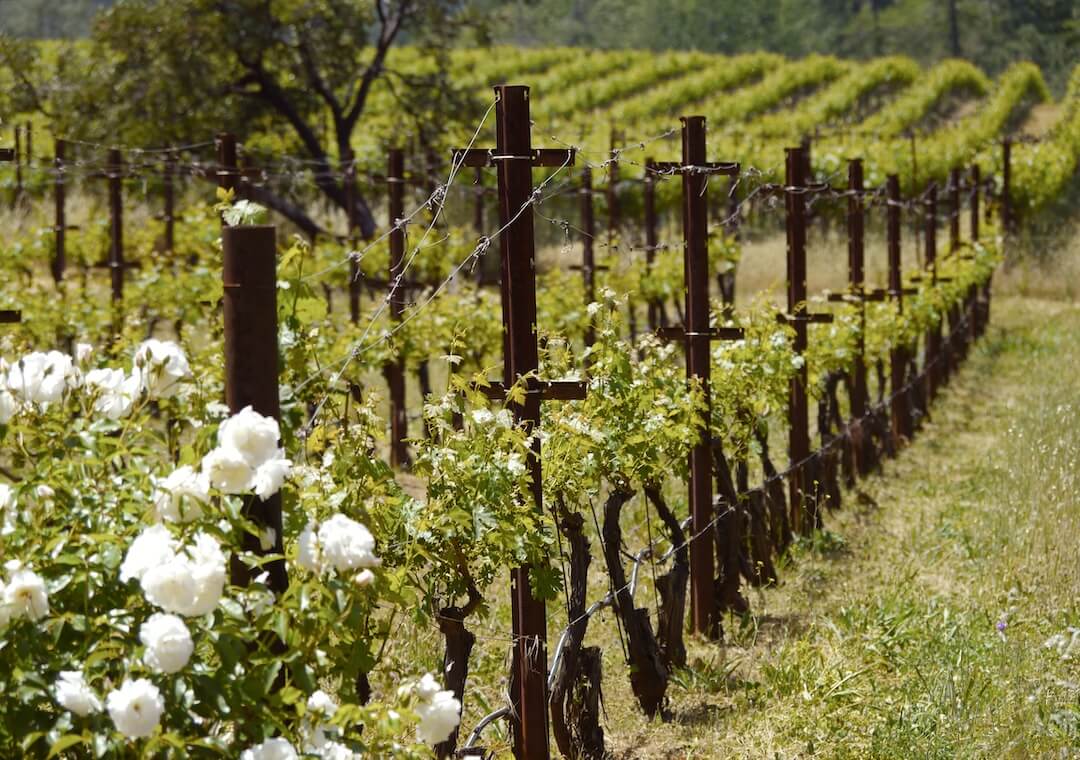
Howell Mountain is a pretty distinct place to grow Cabernet Sauvignon. The AVA begins at 1,400 feet, which puts most of its vineyards above the fog that regularly covers the Napa Valley floor. At Spence, our vineyard sits at roughly 1,900 feet on a breezy knoll with shallow, red volcanic soil.
That combination of elevation, sun, wind, and difficult soil has a real effect on how the vines grow and, ultimately, how the wine tastes. Howell Mountain Cabernet is generally known for concentration, firm structure, and the ability to age. Those are all characteristics we see in our wines.
Table of Contents
- What Is the Howell Mountain AVA?
- How Does Elevation Affect Howell Mountain Cabernet?
- What Do Howell Mountain’s Volcanic Soils Contribute?
- How Does Howell Mountain Cabernet Compare to Valley Floor Cabernet?
- What Does This Mean for Spence Vineyards?
- Can You Taste the Difference at the Estate?
- Frequently Asked Questions
What Is the Howell Mountain AVA?
Howell Mountain became an American Viticultural Area, or AVA, in 1983. It was the first recognized sub-appellation within Napa Valley.
An AVA is a federally recognized grape-growing region with specific geographic or climatic features. Howell Mountain is unusual because its boundary is based largely on elevation. The AVA begins around 1,400 feet, above much of the fog that settles over the valley floor.
The entire AVA covers about 14,000 acres, with only a relatively small portion planted to vines. Growing grapes up here is not easy. The terrain is rugged, the soils are generally shallow, and there is not much extra water or nutrition available to the vines.
Our estate sits at approximately 1,900 feet, well above the lower boundary of the AVA.
How Does Elevation Affect Howell Mountain Cabernet?
Because Howell Mountain is usually above the fog, its vineyards receive sunlight earlier in the day than vineyards on the valley floor. Daytime temperatures can also be cooler, while nights may stay a little warmer. This generally creates a smaller temperature swing between day and night.
These conditions allow Cabernet Sauvignon to develop flavor and tannin gradually while maintaining acidity. The exact effect depends on the vineyard, the slope, and the weather during a particular growing season, but elevation is a big part of what separates Howell Mountain from the valley below.
Howell Mountain Cabernet is typically known for dark fruit, firm tannins, freshness, and the ability to age. These wines can be powerful when they are young, but they tend to become more layered and approachable with time in the bottle.
What Do Howell Mountain’s Volcanic Soils Contribute?
Howell Mountain is known for volcanic soils, including decomposed volcanic ash and iron-rich red clay. At Spence, the red soil is one of the first things people notice when they visit the property.
The soil is rocky, shallow, and quick-draining. That limits how much water and nutrition are available to the vines and naturally restricts their growth. These conditions can lead to smaller berries and lower yields.
Smaller berries generally have a higher proportion of skin to juice. Since much of a red wine’s color and tannin comes from the skins, that can contribute to deeper color, more structure, and greater concentration in the finished wine.
Soil is not the only thing that determines how Cabernet will taste, but it has a meaningful effect on the way the vines grow. On Howell Mountain, it works together with the elevation, sun, and climate to give the wines their character.
How Does Howell Mountain Cabernet Compare to Valley Floor Cabernet?
There is no single style of Napa Valley Cabernet, but there are some general differences between mountain and valley floor vineyards.
Many valley floor vineyards sit in deeper, more fertile alluvial soils and spend more of the morning under fog. Their Cabernet can have softer tannins and be more approachable earlier in its life.
Mountain vineyards are generally rockier, shallower, and more exposed. The vines have to work harder, and the resulting wines often have firmer tannins, more concentration, and greater structure.
That does not mean one is better than the other. They are different expressions of the same grape. Farming, harvest timing, winemaking, and vintage conditions all matter too. Still, when you taste a valley floor Cabernet next to one from Howell Mountain, the difference can be pretty noticeable.
What Does This Mean for Spence Vineyards?
Spence Vineyards was founded by Allen and Jackie Spence and remains a small family-run winery today under Dave and Suzie Spence. We produce roughly 1,000 cases each year, with estate-grown Howell Mountain Cabernet Sauvignon at the center of what we do.
Our vineyard sits on a breezy knoll at approximately 1,900 feet. Most mornings, the fog stays below us. The vines grow in shallow, rocky red soil, and the property gets plenty of sun and wind.
We see the effects of those conditions in the Cabernet. The wines have the richness, concentration, and structure associated with Howell Mountain, but we also want them to have balance and freshness. The goal is to make a wine that is enjoyable now but has the structure to develop for years.
When we describe our Cabernet as a Howell Mountain wine, we are talking about more than the name of the AVA. We are talking about the actual place where we live, work, host guests, and grow the fruit.
Can You Taste the Difference at the Estate?
The easiest way to understand Howell Mountain Cabernet is to taste it where it was grown.
We host private, seated tastings by appointment at our estate on Howell Mountain. Guests can see the red volcanic soil, experience the elevation, and taste through the wines just a short distance from the vineyard.
Our tastings are personal and relaxed. We like having enough time to share the wines, answer questions, and tell people about the property and our family. You can request a tasting at Spence Vineyards through our website.
For guests who cannot make it to Napa Valley, we also offer select in-home tasting experiences. These allow us to bring the wines and the story behind them directly to groups around the country.

Frequently Asked Questions
What is the Howell Mountain AVA?
The Howell Mountain AVA is a federally recognized grape-growing region within Napa Valley. Established in 1983, it begins around 1,400 feet in elevation and is best known for its mountain terrain, volcanic soils, and Cabernet Sauvignon.
Why does the fog line matter?
Much of the fog that covers the Napa Valley floor stays below Howell Mountain’s vineyards. This gives the vines more direct morning sunlight and creates a different growing environment from the valley below.
What does Howell Mountain Cabernet taste like?
Every producer and vintage is different, but Howell Mountain Cabernet is generally known for dark fruit, firm tannins, freshness, concentration, and aging potential.
Is Howell Mountain Cabernet better than valley floor Cabernet?
Not necessarily. Mountain and valley floor vineyards produce different styles of Cabernet Sauvignon. Mountain wines often have more structure and concentration, while valley floor wines can have softer tannins and become approachable sooner.
Can I visit Spence Vineyards?
Yes. We offer private, seated tastings at our Howell Mountain estate by appointment. You can submit a request through our visit page.